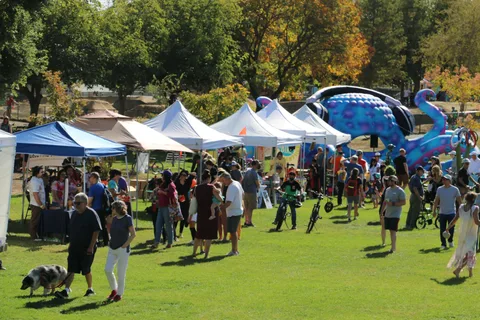
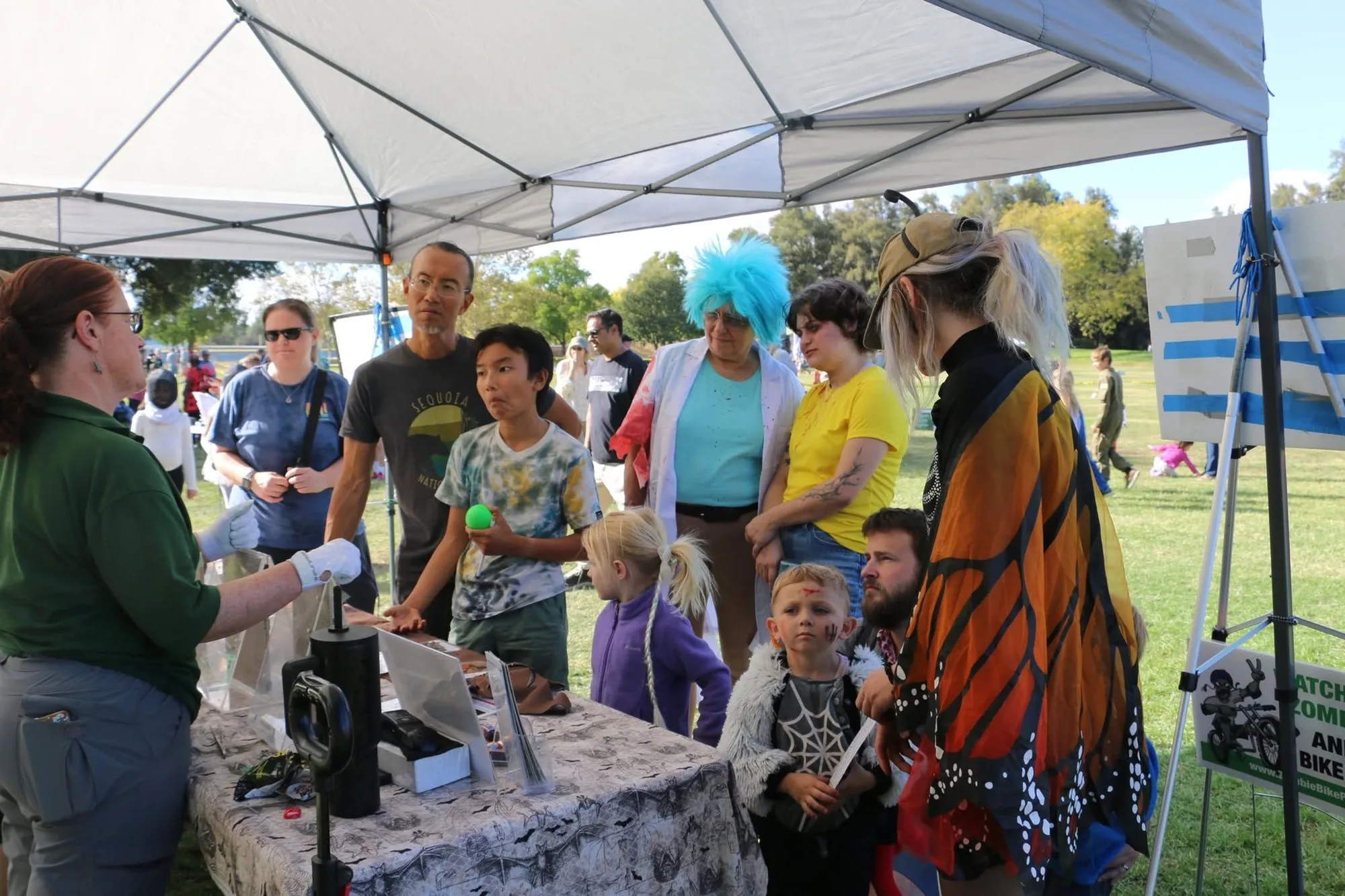
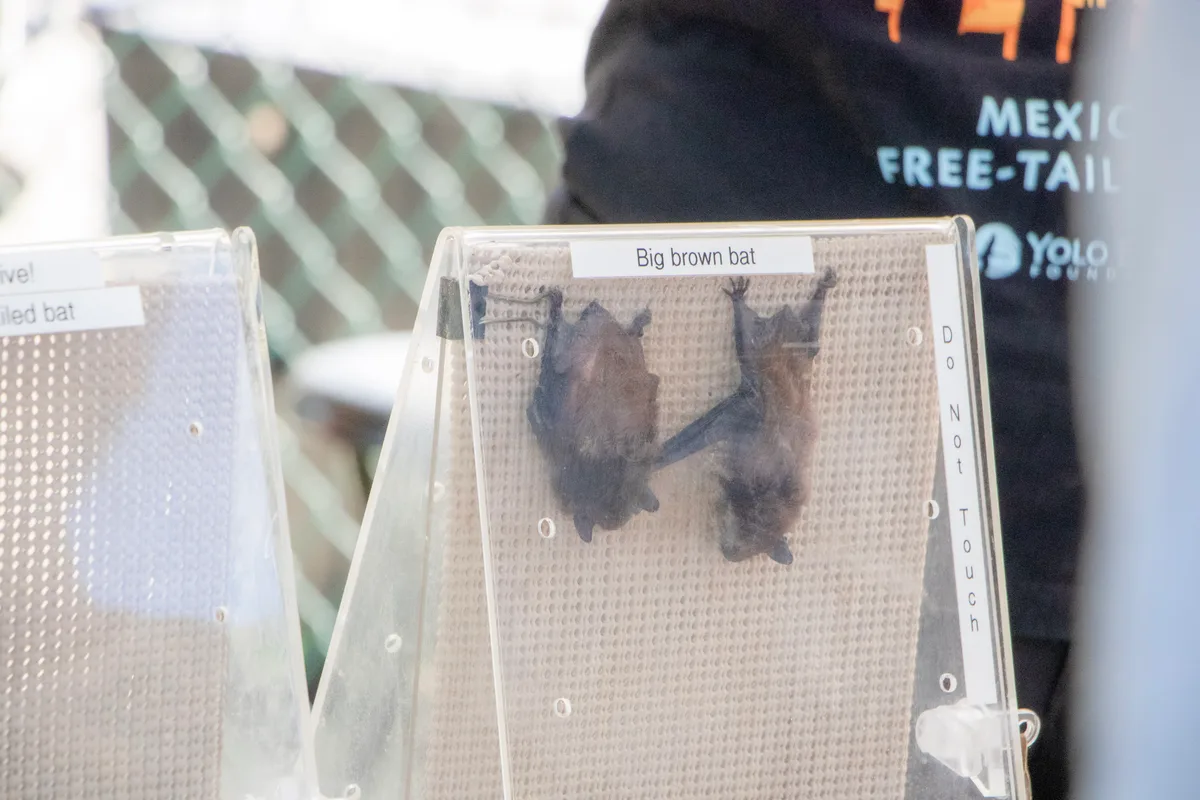
Live bats, up close, at Community Park. Corky Quirk and Charlie Russell of NorCal Bats bring them out every year, and the station is exactly what it sounds like: real bats, a few feet away, and two people who will happily answer every question you have about them.
Saturday, October 31, 11am to 3pm, Community Park. Free, like everything else at the festival.
Who NorCal Bats are
NorCal Bats rescues, rehabilitates and releases bats across Northern California. A couple of hundred injured and orphaned bats come through in a year, cared for by a network of trained volunteer rehabilitators, and released back to the wild wherever that is possible. The bats you meet at the festival are the ones that cannot be released, and they have a job instead: changing the mind of everybody who meets them.
Corky Quirk founded it and directs it. She has worked with native bat species since 2004, holds a degree in Natural Resource Planning and Interpretation, and started out as an environmental educator, which is why the station never feels like a lecture. Charlie Russell has volunteered with NorCal Bats since 2019 and has been doing bat outreach in this county for decades. If you have ever been on a bat walk in the Yolo Bypass, you have probably met him.
Their emergency rescue line is 530-902-1918, and it is worth putting in your phone. If you ever find a bat on the ground, do not touch it: call them.
The other thing Yolo County does with bats
Most people in Davis have no idea they live next door to one of the largest bat colonies in California. Roughly 250,000 Mexican free-tailed bats spend the summer roosting in the Yolo Causeway, the elevated stretch of I-80 between Davis and West Sacramento that you drive over without a second thought. Between them they eat something like a ton and a half of insects a night.
Every summer, from June to September, the Yolo Basin Foundation runs Bat Talk and Tours: about forty five minutes on bat natural history, then a carpool out through the rice fields into part of the Yolo Bypass Wildlife Area that is normally closed to the public, to watch the colony come out at sunset in ribbons. It takes about three hours and it sells out. NorCal Bats help run them.
So: meet them at the festival in October, then go and see a quarter of a million of them leave a bridge in July.
More at norcalbats.org.